
The 9mm has dominated the defensive handgun market for decades, and for good reason: the cartridge delivers a balance of capacity, controllability, and terminal performance that no other common caliber has matched at the same price point. But not all 9mm is created equal — and the gap between the best defensive loads and the worst is wide enough to matter when it counts.
If you carry a 9mm, the ammo in your magazine deserves the same attention you gave to choosing the gun. Here’s what the best defensive 9mm loads have in common, what separates them from range ammo, and which ones we’d actually stake our personal protection on in 2026.
Why Defensive Ammo Isn’t Just “Premium” Range Ammo
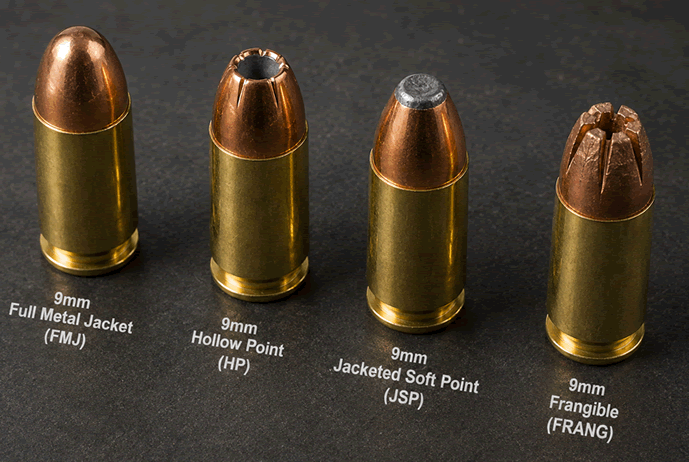
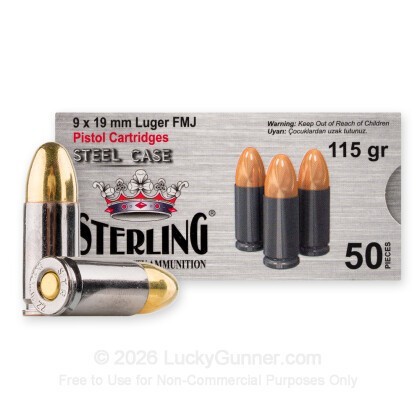
The distinction matters. A 115-grain FMJ round — the kind you buy in bulk for training — does one thing at the terminal end: it punches a hole and keeps going. That’s fine for paper and steel targets. Against a threat, a round that over-penetrates without expanding is leaving performance on the table and potentially creating liability downrange.
Modern defensive hollow points are engineered to do something different. They expand on impact — from their loaded diameter of roughly 0.355 inches to somewhere between 0.55 and 0.70 inches in the best loads — while retaining enough mass to reach critical anatomy. The FBI ballistic protocol, which most serious defensive ammo is tested against, calls for 12 to 18 inches of penetration in calibrated 10% ballistic gelatin, with consistent expansion across multiple barrier types: bare gel, heavy clothing, wallboard, plywood, auto glass.
The loads that consistently meet those standards in independent testing are not the same ones you’ll find in the discount bin. They’re not dramatically more expensive either — you’re typically paying $1.00 to $1.50 per round versus $0.25 to $0.40 for practice ammo. For a 15-round magazine, that’s a $10 difference that covers the round you’re betting your life on.
“The gap between the best defensive loads and cheap FMJ is wide enough to matter. For a 15-round magazine, you’re talking about a $10 difference — for the round you’re betting your life on.”
What to Look For
Consistent expansion across barrier types. A round that expands perfectly in bare gel but plugs up with heavy denim isn’t a reliable defensive load. The best modern hollow points use polymer tips, bonded cores, or skived jacket designs specifically to prevent plug-and-fail under heavy clothing.
Penetration in the 12–18″ window. Too shallow and the round doesn’t reach vital structures. Too deep and it exits — becoming a threat to anything beyond the target. The FBI standard exists for a reason, and the loads that hit it consistently are the ones worth carrying.
Reliability in your specific pistol. This is the one no chart can tell you. Before you carry a load, run at least 200 rounds of it through your gun. Defensive ammo’s slightly different pressure curves and bullet profiles can expose feed ramp geometry issues, extractor tension problems, and magazine spring fatigue that range ammo won’t reveal. If it doesn’t run flawlessly through 200 rounds, it doesn’t go in your carry magazine.
The Best 9mm Defensive Loads in 2026
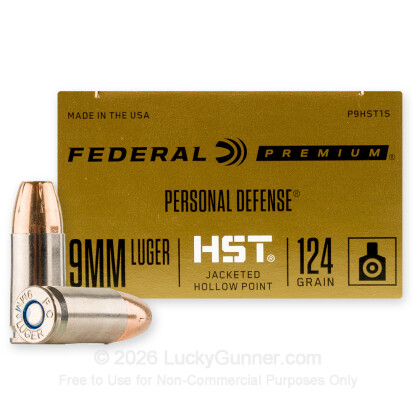
Federal Premium HST
9mm | 124gr +P and 147gr Standard Pressure
Federal HST is the gold standard of duty and defensive 9mm. Originally developed for law enforcement — the HST designation stands for the program that qualified it for LE use — it’s since become the benchmark against which most other defensive loads are measured. The skived hollow point expands reliably through heavy clothing and most common barriers, the bonded core retains weight through barrier penetration, and the 147gr standard pressure load is particularly well-regarded for use in compact and subcompact pistols where velocity is lower than full-size guns. Consistent, proven, and available. If you’re only going to stock one defensive load, make it this one.
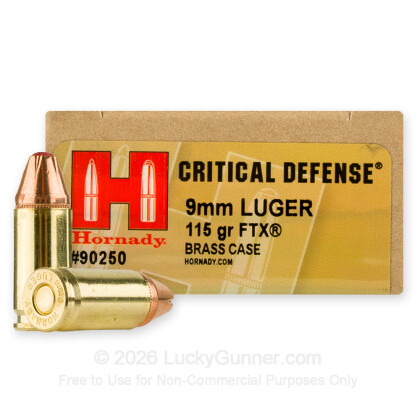
Hornady Critical Defense
9mm | 115gr FTX
Hornady’s Critical Defense series uses their Flex Tip (FTX) projectile — a polymer-tipped hollow point designed specifically to prevent plug failure through heavy denim and layered clothing. At 115 grains it’s the lightest of the major defensive loads, which means slightly less penetration depth but higher velocity and slightly reduced recoil. In full-size and compact pistols the numbers are solid; in pocket pistols with 3-inch or shorter barrels it’s one of the more consistent performers. The nickel-plated brass feeds smoothly in almost everything and resists corrosion in a carry environment.
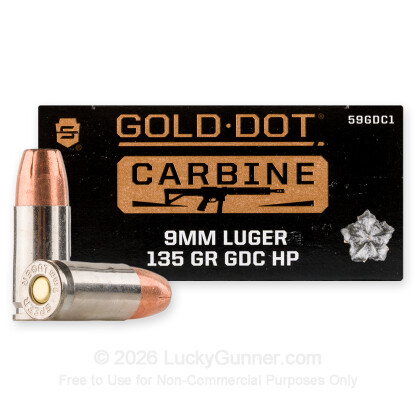
Speer Gold Dot
9mm | 124gr +P and 147gr
Gold Dot is the other half of the law enforcement defensive ammo conversation. Where HST dominates among federal agencies, Gold Dot has a long track record in state and local law enforcement — its bonded jacket-to-core construction was the first of its kind and remains one of the most reliable ways to ensure the projectile retains its mass through barriers. The +P 124gr load hits hard and expands consistently; the 147gr standard pressure version is one of the softest-shooting serious defensive loads available. Both are available in short barrel configurations specifically tuned for pocket and subcompact pistols.
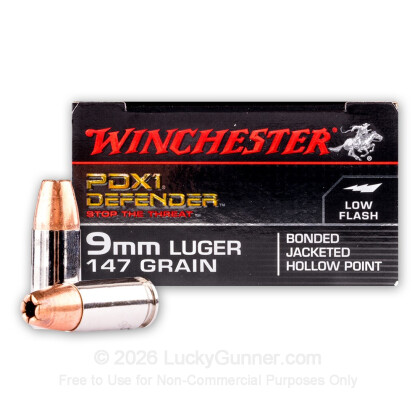
Winchester PDX1 Defender
9mm | 124gr +P
Winchester’s PDX1 uses a bonded jacket design with a notched hollow point that delivers reliable expansion even after passing through auto glass — one of the toughest barrier tests for hollow point performance. The +P pressure loading gives it a velocity edge that helps maintain expansion at the lower end of its penetration range. PDX1 is the load that showed up in the FBI’s 2014 Miami-Dade testing and performed at or above the standard in nearly every barrier scenario. It’s widely available and competitively priced for a premium defensive load.
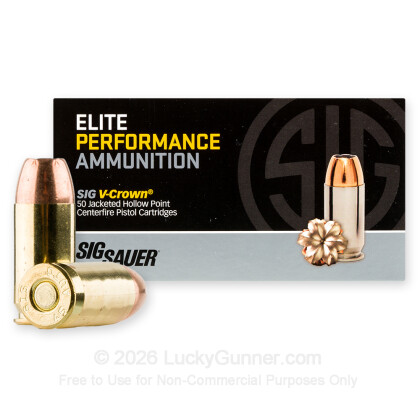
Sig Sauer V-Crown
9mm | 115gr and 124gr
Sig’s V-Crown is the newer entry on this list and has earned its place quickly. The stacked hollow point design — a secondary hollow point cavity inside the primary one — produces unusually consistent expansion across barrier types, and the taper crimp on the case mouth prevents bullet setback during cycling, which matters in high-round-count carry situations. V-Crown is the standard load shipped in Sig’s own pistols for a reason. If you’re running a Sig P365, P320, or similar platform, this is the natural first load to test.
The Bottom Line
Any of the five loads above will outperform generic FMJ in a defensive situation by a margin that matters. The ranking between them is largely academic — real-world performance differences between Federal HST and Speer Gold Dot are smaller than the variance between individual test shots.
The more important variable is reliability in your specific gun. Buy two boxes of your chosen defensive load. Run 100 rounds for function testing. Rotate the remaining rounds into your carry magazine and replace them every six to twelve months. That’s the complete defensive ammo protocol — not complicated, not expensive, and more important than any other gear upgrade you’ll make this year.