

Frank Hamer and his Instincts were a Bridge between Old West Justice and Modern Investigations.
Story by Paul PawelaThe American West produced no shortage of legends, but few carried the weight, contradiction and grim authority of Frank Hamer. He was a towering figure in a sweat stained Stetson, a man whose silence could intimidate a room faster than
another man’s pistol. To admirers, he was the embodiment of frontier justice. To critics, he represented the brutal edge of old Texas law enforcement. Yet nearly a century after the ambush that ended the reign of Bonnie Parker and Clyde Barrow,
Hamer remains one of the most consequential and misunderstood lawmen in American history.
By the time Hamer entered the Bonnie and Clyde manhunt in 1934, he was already a legend among the Texas Ranger Division. Born in 1884 in Fairview, Texas, he grew up in a rough agrarian world where survival demanded toughness and hesitation could prove fatal. The Texas frontier was fading, but violence still ruled much of the state. Feuds, bootleggers, cattle rustlers and racial unrest created a landscape where lawmen often lived as dangerously as the outlaws they pursued.
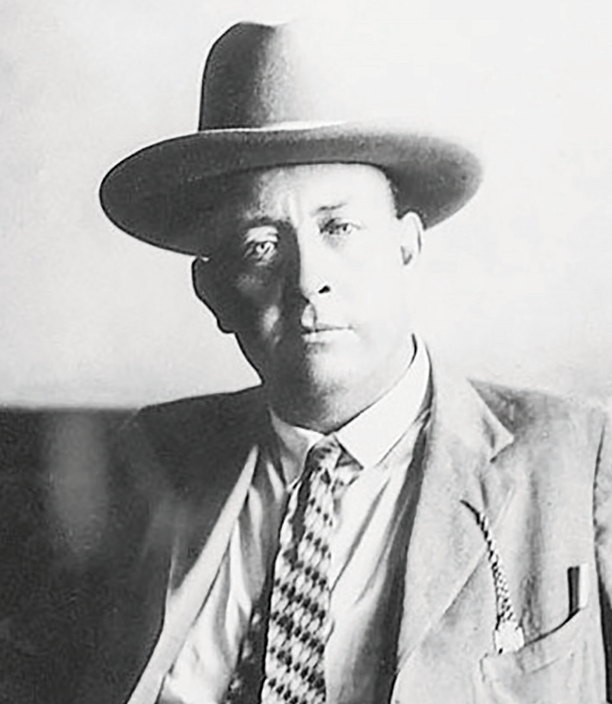
Hamer fit the era perfectly. Tall, broad-shouldered and physically imposing, he joined the Rangers in 1906 and quickly developed a reputation for fearlessness. Over the next several decades, he tracked fugitives across deserts and swamps, fought gun battles and survived wounds that would have ended most careers. Stories spread that he had killed more than 50 men in the line of duty, though exact numbers remain impossible to verify. In Texas lore, Hamer became less a man than a force of nature.
But Hamer’s career unfolded during one of the darkest periods in Southern law enforcement. The Rangers frequently operated with little oversight, and accusations of brutality followed them constantly. Hamer himself was involved in violent crackdowns against labor organizers and minority communities. In the early 20th century, law enforcement in Texas often blurred the line between policing and intimidation, and Hamer’s record reflects the complicated moral terrain of his time. He was brave, unquestionably, but also a product of a violent system that rewarded force over restraint. Then came Bonnie and Clyde.
DURING THE GREAT Depression, the Barrow Gang captured America’s imagination. Newspapers transformed the young outlaw couple into folk antiheroes, stylish rebels thumbing their noses at banks and authority. In reality, the gang left behind a trail of dead police officers, terrified civilians and stolen cars across multiple states. Their mobility made them extraordinarily difficult to catch. Local police departments lacked coordination, and Clyde Barrow exploited jurisdictional confusion with ruthless efficiency.
Texas prison officials turned to Hamer because they needed someone who understood criminals as hunters understand prey. Unlike many officers chasing headlines, Hamer approached the pursuit methodically. He studied the gang’s habits, mapped their movements, and concluded that Clyde’s loyalty to family and familiar contacts would eventually expose him. Rather than chasing rumors, Hamer predicted behavior. It was detective work sharpened by years of tracking armed men through unforgiving country.
The hunt culminated on May 23, 1934, near Bienville Parish, Louisiana. Hamer and a posse concealed themselves along a rural road where they believed Bonnie and Clyde would pass. When the stolen Ford V-8 appeared, officers opened fire almost instantly. The barrage was overwhelming. By the time the smoke cleared, Bonnie Parker and Clyde Barrow were dead inside the bullet riddled car.
The ambush became one of the most famous moments in American criminal history. To some observers, Hamer was a hero who ended a violent crime spree. To others, the killing resembled an execution more than an arrest. Debate over the morality of the ambush has endured for decades, feeding books, films and scholarly arguments about justice, vigilantism and the mythology of the American outlaw.

Hollywood eventually reshaped Hamer’s image for modern audiences. In Arthur Penn’s landmark 1967 film Bonnie and Clyde, the lawmen were largely portrayed as faceless instruments of repression while the criminals emerged as glamorous rebels. The film reflected the anti authoritarian mood of the 1960s, but many historians argued it distorted reality. Decades later, the 2019 film The Highwaymen attempted to restore Hamer’s perspective, portraying him as an aging but relentless investigator confronting killers romanticized by the public. The truth lies somewhere between myth and movie script.


HAMER WAS NEITHER spotless hero nor cartoon villain. He was a hard edged lawman forged in a brutal era, capable of courage, violence, loyalty and ruthlessness in equal measure. His methods reflected the world he inhabited, a place where law often rode armed and justice arrived in clouds of dust and gun smoke. Yet his influence on American policing was undeniable. Hamer helped pioneer coordinated interstate criminal investigations at a time when modern law enforcement systems barely existed. He understood criminal psychology instinctively and relied on patience and pattern recognition long before such techniques became standard investigative practice. When Hamer died in 1955, he left behind a legacy tangled in controversy but impossible to ignore. The mythology of Bonnie and Clyde may always attract more romance than the story of the men who hunted them. Outlaws tend to age well in American memory; lawmen rarely do.
Still, Hamer endures because he embodied a deeper contradiction in the American story: the uneasy relationship between order and violence, justice and force, heroism and brutality. He stood at the fading edge of the Old West and the beginning of modern criminal investigation, a man carrying frontier instincts into the machine age. And in the end, it was Frank Hamer, not Bonnie and Clyde, who proved that legends can be hunted down. ★

BM “Manny” Gault; seated, left to right: Bob Alcorn, Henderson Jordan and Hamer. (WIKIPEDIA)