
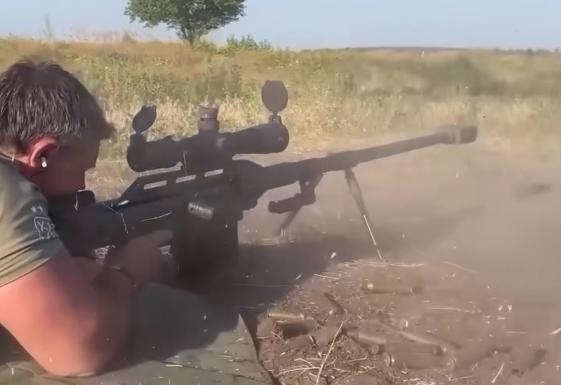
An extraordinary 4,000-meter sniper shot involving a Ukrainian-made Snipex Alligator rifle highlights how artificial intelligence, drones, and precision shooting are changing the modern battlefield.
By WsjStaff
According to an article from San.com, a Ukrainian sniper has reportedly accomplished one of the most extraordinary feats in modern military marksmanship, eliminating two Russian soldiers with a single shot from an astonishing distance of 4,000 meters, or approximately 2.49 miles. The engagement, attributed to Ukraine’s elite Pryvyd, or “Ghost,” sniper unit, has been described as a new world record for the longest confirmed sniper kill in combat history. While independent verification of the record remains important, the reported engagement illustrates a significant development in long-range warfare: the integration of precision rifles, aerial surveillance, and artificial intelligence.
What makes this incident particularly remarkable isn’t simply the distance. It is the sophisticated coordination of technology and personnel reportedly required to make the shot possible. At nearly two and a half miles, the engagement pushes beyond conventional expectations of battlefield marksmanship. The sniper was reportedly operating as part of an integrated team that included drone operators, spotters, and personnel using computer-assisted ballistic calculations.
Rather than relying exclusively on what the shooter could observe through a riflescope, the team reportedly used electronically transmitted targeting information to coordinate the engagement. The result represents a potential milestone in the evolution of precision shooting.
The Snipex Alligator: A Ukrainian Long-Range Powerhouse
At the center of this remarkable engagement was the Ukrainian-manufactured Snipex Alligator, a massive 14.5mm anti-materiel rifle designed primarily to engage equipment, lightly armored vehicles, and other hardened targets. Unlike conventional sniper rifles chambered in .308 Winchester, .300 Winchester Magnum, or .338 Lapua Magnum, the Alligator employs the considerably larger 14.5×114mm cartridge.
Originally developed for heavy military applications, this cartridge delivers substantially greater projectile mass and energy than traditional sniper ammunition. The rifle itself is equally imposing.
According to the video’s account, the Alligator weighs approximately 55 pounds and measures roughly 6.5 feet in length. Its substantial size makes it unsuitable for the mobility normally associated with traditional sniper operations. However, portability takes a secondary role when the objective involves engaging targets at extreme distances.
The rifle’s heavy construction and powerful cartridge provide the foundation for long-range ballistic performance, although even these characteristics cannot eliminate the substantial challenges involved in a 4,000-meter shot. At such distances, equipment represents only one part of the equation. Environmental conditions, projectile behavior, and accurate targeting information become increasingly important.
The Challenge of a 4,000-Meter Shot
To appreciate the reported accomplishment, consider the enormous distance involved. Four thousand meters equals approximately 13,123 feet, or nearly 44 football fields placed end to end.
Even experienced precision shooters recognize that engaging targets beyond 1,000 meters requires considerable skill, specialized equipment, and favorable environmental conditions. At four times that distance, relatively small errors can produce dramatic changes in where a projectile strikes.
Wind is among the most significant variables. A projectile traveling several thousand meters may encounter different wind conditions along its flight path. Wind speed and direction can change across open terrain, wooded areas, and changes in elevation.
Atmospheric pressure, temperature, and humidity also influence projectile flight. At extreme distances, shooters must additionally consider the Earth’s rotation, commonly addressed through calculations involving the Coriolis effect. The projectile’s natural dispersion introduces another challenge. Even a highly accurate rifle and ammunition combination cannot guarantee identical impacts from shot to shot. These factors make the reported engagement exceptional, particularly because the targets were reportedly identified and monitored through an electronic surveillance network.
The shot was not simply a demonstration of individual marksmanship. It was reportedly the product of coordinated battlefield intelligence.
Artificial Intelligence and Drones Enter the Equation
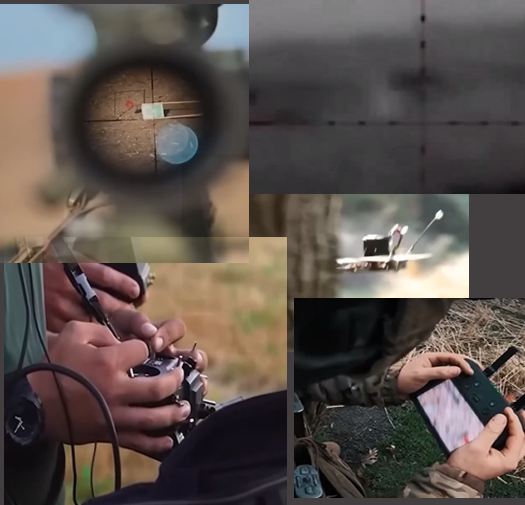
Perhaps the most significant aspect of the engagement was the reported use of drone-based surveillance and AI-assisted ballistic calculations. According to the account, the Ukrainian sniper team relied on several interconnected elements to coordinate the shot.
Aerial observers monitored the target area while spotters and technical operators supplied information to personnel responsible for the firing solution. Artificial intelligence reportedly assisted with trajectory calculations, while drone imagery provided additional situational awareness.
The unit commander reportedly emphasized that the engagement depended on cooperation among shooters, spotters, AI operators, and aerial observers. Each component contributed information that would have been difficult for an individual sniper to obtain independently. The account further suggests that the shooter did not directly observe the targets with the naked eye, instead relying on electronically relayed information.
That distinction is significant. Traditional sniper operations generally involve a shooter and spotter working together to identify targets, evaluate conditions, and observe impacts. In this reported engagement, the spotting process expanded into a network involving aerial surveillance and computational assistance.
It demonstrates how modern precision shooting is increasingly becoming a coordinated technological operation rather than an isolated contest between shooter and target. However, the precise capabilities of the AI system, its level of automation, and its contribution to the final firing solution have not been independently established.
Thermal Imaging Changes Battlefield Concealment
The article describes how Ukrainian forces have integrated thermal imaging into sniper and drone operations.
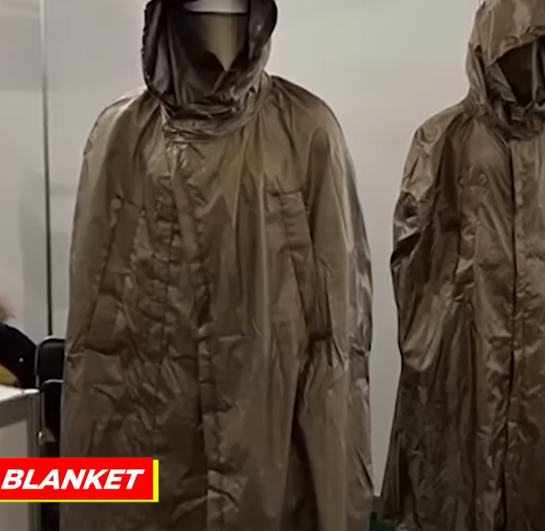
Unlike conventional optical systems that depend on visible light, thermal cameras detect differences in infrared radiation associated with surface temperatures. This technology allows operators to identify potential human targets in darkness and under certain conditions where ordinary visual observation would be difficult. The transcript references Ukrainian sniper engagements near Bakhmut at distances of approximately 900 meters or more using thermal optics.
For perspective, 900 meters represents nearly ten football fields. At those distances, identifying and tracking personnel at night can provide a substantial tactical advantage.
However, thermal imaging is not infallible. Terrain, vegetation, weather, atmospheric conditions, and thermal shielding can interfere with detection. The transcript also describes Russian soldiers employing thermal blankets to reduce their infrared signatures. Such equipment attempts to limit the contrast between a person’s thermal signature and the surrounding environment.

Nevertheless, concealment from thermal sensors does not necessarily provide concealment from conventional aerial cameras. Changes in movement, vegetation, and terrain can still reveal activity to observers. This combination of surveillance technologies creates significant challenges for forces attempting to remain undetected.
From Individual Snipers to Integrated Battlefield Systems
The larger lesson from the reported 4,000-meter engagement extends beyond the rifle or the shooter. Modern battlefield surveillance increasingly connects drones, sensors, communications networks, and precision weapons into integrated systems. Information gathered by one platform can be transmitted to another, allowing multiple operators to contribute to the same engagement. A drone may locate suspicious movement. A surveillance operator may monitor the area. A precision-shooting team may then use that information to assess whether a target can be engaged.
The video describes this coordination as a transition from traditional sniper operations toward a more comprehensive battlefield targeting network. Such integration can improve situational awareness and extend the effective reach of military units. It also introduces new vulnerabilities. Electronic warfare, disrupted communications, inaccurate sensor data, and unreliable targeting information can compromise the effectiveness of these systems. Consequently, human judgment and verification remain essential, particularly when decisions involve lethal force.
A Glimpse Into the Future of Precision Shooting
Whether the reported Ukrainian engagement ultimately receives universal recognition as a world record, its implications are substantial. The Snipex Alligator demonstrates the capabilities of modern heavy-caliber precision rifles, while the reported involvement of drones and AI-assisted calculations illustrates the growing importance of battlefield information systems.
The most consequential development may not be a longer-distance shot, but the expanding ability of military teams to identify, monitor, and engage targets using information gathered beyond the shooter’s immediate field of view. For firearms enthusiasts and long-range shooting observers, the reported 4,000-meter engagement offers a striking example of how precision marksmanship is evolving. The rifle remains essential. So do the shooter’s training, experience, and judgment. But increasingly, the effectiveness of a sniper team depends on the information and technology supporting the person behind the trigger.
At nearly 2.5 miles, this reported shot may ultimately be remembered not only for its extraordinary distance, but also for the technological transformation it represents in modern warfare.