
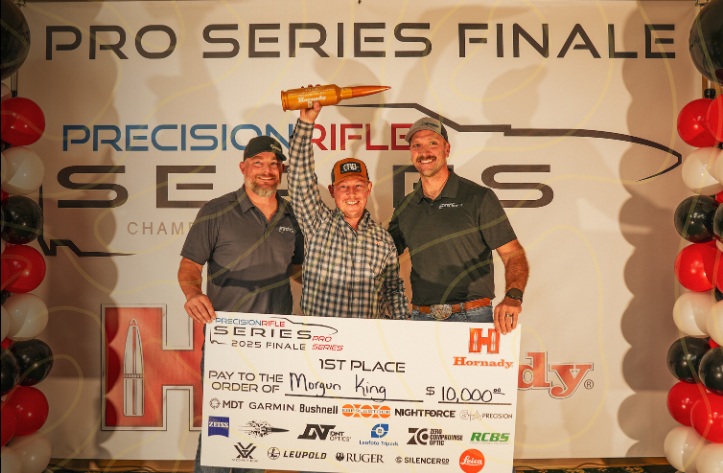
Ever even hear of the “PRS” before?
We take a look at the Precision Rifle Series Tactical and how to train for it.

If you are a rifle shooter, this article is certainly for you. Are you interested in better accuracy and increasing your shooting skills? Once again, this article is certainly for you. Heading to your local rifle range a couple times a year does not give you the skills that you could have with better training and of course, more trigger time. What you need is more direction to achieve your top rifleman’s skills.
The Precision Rifle Series, often just called PRS, has grown into the premier long range rifle competition in the world, attracting thousands of shooters from every walk of life. It’s a blend of marksmanship, strategy, adaptability, and mental grit that has transformed traditional long-range shooting into a competitive sport that’s as intellectually demanding as it is physically precise.
Interesting right? Well within this ecosystem of training, the Tactical Division holds a special place. It appeals to shooters who prefer rifles that resemble those used in military and law enforcement roles, typically chambered in .308 Winchester or .223/5.56 NATO, with restrictions on velocity and no wildcat cartridges and emphasizes skill over sheer firepower.
Whether you’re prepping for your first match or fine-tuning your game to climb the competitive ladder, PRS Tactical requires a structured training approach that blends fundamentals with advanced techniques. This article breaks down that process into practical steps you can follow year round.
Before you train for the Precision Rifle Series Tactical, you’ve got to understand the whole concept of competition itself.
At its heart, PRS tests a shooter’s ability to engage targets at unknown distances, often under time pressure, and from improvised positions. Terrain changes, wind shifts, and stage design mean success in PRS depends on three pillars:
- Accurate shooting fundamentals: your rifle must do what you ask it to do with consistency.
- Ballistic understanding: know how bullets behave under real-world conditions.
- Adaptability and speed: every stage is unique; you win by solving problems well.
The Tactical Division limits rifles to familiar calibers and standard configurations, emphasizing the shooter’s skill rather than specialized hardware. That makes it especially rewarding for newcomers and seasoned shooters alike.
For training you want to start with the fundamentals first.
No matter your background — military, law enforcement, hunter, or weekend range warrior — you must nail the basics of marksmanship before chasing match points.
1. Trigger Control and Sight Alignment
At first glance, trigger discipline feels obvious. But in precision shooting, it’s everything.
Your stance, grip, sight picture, and trigger pull must all work in harmony. Training drills focusing solely on a “surprise break” where you let the shot surprise you to help reduce flinching and inconsistent shots. Make slow, deliberate shots at known distances to reinforce smooth trigger pulls.
This is the core skill that all other performance builds on. Practice makes perfect so practice this one a lot!
2. Rifle Zeroing and Ballistics Data
Before you can trust your rifle in competition, you must build a ballistics profile.
That means:
- Sitting down with a ballistic calculator.
- Identifying your exact ammunition’s velocity and ballistic coefficient.
- Building a dope chart that includes drops and wind holds at 100, 200, 300, … up to 1,200+ yards.
But theory alone won’t cut it. You must confirm your data on the range. Shoot groups at incremental distances and track how your bullet actually behaves in your rifle. Fine-tune your optics and your dope sheet until your theoretical and real world numbers align. Courses offered by training outfits or clubs often incorporate this essential phase.
3. Spotting, Wind Calling, and Environmental Awareness
Target engagement in PRS isn’t “set up, shoot, repeat.” You’re reading wind flags, mirage, humidity, temperature, and even barometric pressure — all of which shape bullet flight. Great shooters spend enormous time mastering these invisible factors because:
A 10 mph crosswind can push a .308 projectile dozens of inches at 800 yards.
Practice wind drills frequently:
- Identify the direction and strength.
- Practice adjusting your aim point based on wind estimates.
- Use mirage through your optics to judge wind shifts.
Advanced training often includes simulated environmental conditions and dramatic wind changes to build confidence.
Structured Training Plans
Training without structure is like shooting without sights. Bad idea right? You’ll shoot, but won’t hit what you aim for.
Beginner Phase (Weeks 1–8)
Goals
Build competence with your rifle and gain comfort in controlled environments.
Focus Areas
- Zero your rifle and verify dope out to 600 yards.
- Refine breathing and trigger control.
- Learn to read flags on a static range.
- Engage steel targets at known distances.
Practical drill examples:
- Minute-of-Angle (MOA) Consistency Drills: Shoot 5-shot groups at 100 yards with different hold points, aim for consistent group sizes.
- Wind Practice Days: Pick a breezy day and spend the session only adjusting for wind at shorter ranges and the skills scale up to longer ones.
Intermediate Phase (Weeks 9–20)
The goals now are to increase practical application of ballistics and environmental reading in dynamic conditions.
Focus Areas
- Introduce unknown distances (UKD): learning to range targets and call dope quickly.
- Introduce time-limited exercises: simulate match cadence.
- Train position transitions: standing, kneeling, barricades.
Drills to incorporate:
- UKD Routine: Scout multiple targets without a range finder. Estimate distance, then confirm with your range finder. Track how your estimation errors map to POA (Point of Aim) adjustments.
- Time Trials: Set a course where you have limited time to shoot, move, and set up. This builds comfort under pressure.
Advanced Phase (Weeks 21+)
Your goals are to train under conditions that resemble actual matches — terrain, timing, fatigue, and mental stress.
Focus Areas
- Simulated stages with timed start signals.
- Team drills: incorporating a spotter/observer role.
- Mental resilience training (discussed below).
Advanced drills:
- Full Match Simulations: Replicate courses of fire from past matches.
- Data Management Sessions: Practice recording shots and adjusting dope for subsequent engagements in real time.
You can also join formal tactical or precision rifle training courses offered across the country. The official PRS organization lists recognized training partners and classes that specifically prep shooters for match conditions.
Mental Training: The Underestimated Edge
Precision rifle shooting isn’t just about physical skill, it’s the mental game that also matters.
During competition, adrenaline spikes, time pressure mounts, and the unexpected happens. Top shooters practice mental preparation:
- Controlled breathing techniques.
- Visualization of successful shots.
- Strategies to recover from mistakes quickly (don’t let a bad shot ruin the rest of your match).
- Goal-setting and reflection journals.
Being calm and methodical under pressure separates top finishers from those who just “show up.”
Competing and Continuous Learning
Training doesn’t stop when you register for your first match. Every PRS event is a learning experience.
Match insights to take home:
- Scoring strategies: Sometimes clean shots more consistently beats risky long holds.
- Course of fire breakdowns: Review your performance stage by stage.
- Network and talk to veterans: Observing how experienced shooters work wind and transitions accelerates your learning.
Remember that PRS matches largely vary. No two are the same; terrain, weather, and design are all different, so adaptability is part of the game.

Gear Integration: Your Tools Matter!
Tactical Division has rules and equipment limits. Work with those constraints:
- Invest in a quality optic with reliable turrets and clear reticles.
- Use a stable rifle platform with a decent trigger and match grade barrel.
- Employ a reliable bipod and shooting bag system.
- Track your data with a ballistic app or dope book.
But gear alone won’t win stages. The biggest gains come from training your mind and skills and then letting your gear support your outcome, hopefully well with lots of practice.
Conclusion: Training as a Journey, Not a Destination
Entering the PRS Tactical Division is like stepping into a lifelong classroom: every match, every breeze shift, every missed shot is a lesson.
Here’s the summary roadmap:
- Foundation: Master fundamentals and ballistics.
- Integration: Practice wind, timing, and movement.
- Simulation: Train like you’re in competition.
- Mental Grit: Sharpen your racing mind as much as your rifle.
By committing to structured practice and applying feedback from every session and match, you’ll steadily elevate your precision, confidence, and competitive edge, not just in PRS, but in any precision rifle discipline you choose to pursue.
The Precision Rifle Series (PRS) allows training to become and even greater force in your rifle shooting ability. Instead of paper targets on a backstop, the training allows more of an understanding of what your gear can actually do and how your mind can also add to that equation. This will allow a happy partnership of rifle and shooter, which will add to your marksmanship skills and ultimately your competition scores. Sounds like a great idea right? Train harder and smarter and be all you can be with your rifle shooting abilities for all distances. Put the time in and you will certainly see the fruits of your rifle training labor.
Remember to also stop on over to the Precision Rifle Series website to learn more on how their competitions will ultimately make you a better long gun shooter.