

Jungle warfare is combat in dense tropical vegetation which presents unique challenges from terrain, climate, and cover. Key techniques and strategies include using the environment for camouflage and ambush, developing small-unit tactics that emphasize trust and quick decision-making by squad leaders due to limited visibility. Success requires adapting to the harsh conditions to use the jungle to your advantage against your enemy. Back in the years of the Vietnam War, this was especially important training to have. Australia was ready to help.
In the dense, steaming jungles of South Vietnam, under the canopy of tropical growth and amid an elusive guerrilla enemy, the nature of the conflict posed unique and brutal challenges. The Australian Army Training Team Vietnam (AATTV) and the broader Australian Army contribution brought to the war a level of jungle-warfare expertise born of earlier campaigns in Southeast Asia. In turn, their experience influenced how the United States Army and allied forces adapted to the rigors of jungle operations in the Vietnam War. This article explores how Australian forces developed and applied jungle warfare doctrine, how that doctrine came into play in Vietnam, how Australia advised U.S. efforts, and what the legacy of those engagements means for modern jungle and counter-insurgency operations.
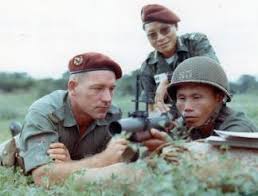
Australia’s proficiency in jungle warfare did not begin in Vietnam as it was forged through the experiences of World War II in the Pacific and the post-war operations in places such as the Malayan Emergency (1948–1960). Senior Australian officers recognized that the very nature of jungle and counter insurgency warfare demanded tactics quite different from the open terrain, combined arms doctrine of Europe. This is complete guerilla warfare in a very rough environment. A different approach was needed for fighting this non-traditional form of combat. Early on, Australian forces were not well-prepared for jungle combat, having trained primarily for desert warfare. The harsh lessons learned in Malaya, New Guinea, and elsewhere led to the development of a new doctrine for jungle warfare.
Australia’s involvement in World War II jungle warfare was largely in New Guinea against Japan. The Kokoda Track campaign was a pivotal battle where Australian soldiers faced extreme terrain, disease, and fierce close-quarters fighting, which ultimately helped shift the tide of the war in the Pacific. This experience led to the development of new jungle warfare training and doctrines, transforming the Australian Army into a highly skilled jungle fighting force. This training would prove very important in Australia’s role in the future Vietnam War.
On May 24, 1962 the Australian government announced the deployment of up to 30 officers and warrant-officers to South Vietnam to provide jungle warfare instruction as part of the existing advisory framework. The unit became known as the Australian Army Training Team Vietnam (AATTV). Their role initially was to train and advise, not to engage in large-scale combat operations. Later that would change to combat also.
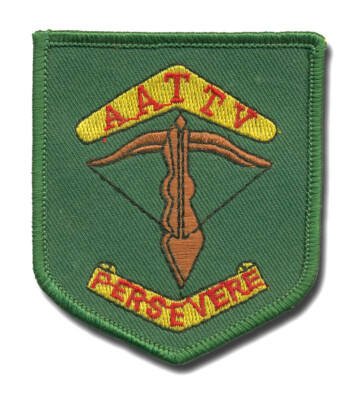
Australian Army Training Team Vietnam (AATTV) is quite known for this summary:
- Mission: To provide military training, advice, and support to South Vietnamese forces and local units, operating in a counter-insurgency capacity.
- Operational period: The team was in Vietnam from 1962 to 1973.
- Composition: Comprised entirely of Australian Army volunteers who served in an advisory capacity, often working in the field with the units they were advising.
- Tactics: Team members frequently accompanied South Vietnamese units on patrols and operations, sometimes engaging in direct combat.
- Legacy: The AATTV is one of the most decorated units in the history of the Australian Army, having been awarded numerous honors including the Vietnam Gallantry Cross Unit Citation.
Major key points of this type of jungle combat are:
- Small-unit patrolling (squads and platoons) moving stealthily through jungle terrain, gaining contact rather than relying solely on mass formations.
- Ambush and counter-ambush, rather than simply “search & destroy” in large formations.
- Patience and sustained presence by spending more time in the jungle patrol environment, less dependence on large-scale firepower or heavy artillery as first recourse.
- Building up a core of trained jungle specialists who could operate in rough terrain and instruct others.
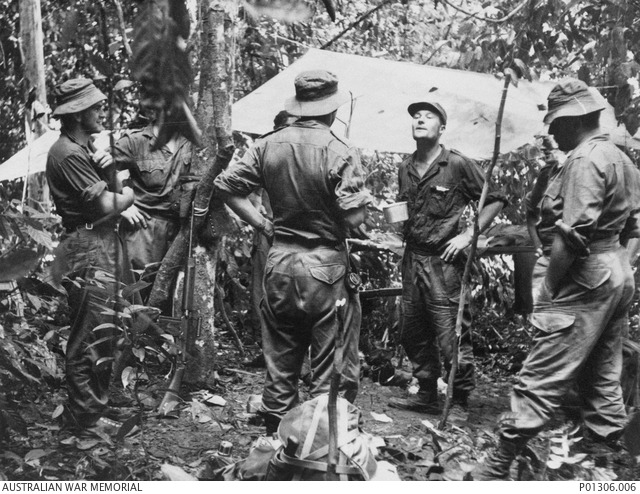
The Australian advisors helped out by:
- Jungle training curriculum: The Australians had already established courses pre-Vietnam (Canungra) and were able to assist allied training.
- Tactical manuals and drills: They emphasized pre-contact routines, immediate action drills for jungle contact, patrolling techniques over days rather than hours. Reddit users commentary indicates Australians had a “two weeks in, two days out” cycle for jungle patrols, reducing resupply strain and increasing stealth.
- Area familiarity: Australian units operating continuously in one province (Phuoc Tuy) developed local expertise in terrain, Vietnamese tribal and village dynamics, enemy infiltration routes, and the interplay between population, insurgency and jungle base areas. This long-term presence contrasted with the U.S. tendency to rotate large units frequently.
- Special operations and tunnel warfare: Australian engineers and infantry were experienced in tunnel detection, clearance, booby-traps, ambush preparation skills that were shared with U.S. units in joint operations like Operation Crimp.
- Australian troops partnered with U.S. formations in operations such as Operation Crimp (January 1966) in the Ho Bo Woods (Binh Duong Province). In that operation the Australians, integrated with U.S. brigades, uncovered an extensive tunnel network and captured intelligence. The Australian expertise in jungle penetration, explosives, and patrolling contributed to the team effort of these operations.

What did the U.S. advisors think of their Australian counterparts? While the U.S. Army did not fully adopt Australian doctrine wholesale, the Australians’ presence and training contributed to a gradual U.S. adaptation to jungle conditions. The concept of persistent patrolling, smaller unit operations, and building local knowledge gained traction in U.S. units. Moreover, Australian training centers and advisory teams helped improve allied jungle warfare capability overall. Training was an important strategy.

What legacy has the AATTV left? Here is but a few answers to that question.
- Doctrine transfer: The idea that smaller nations with regional experience can provide valuable doctrine and training to larger allies remains relevant today in coalition operations.
- Jungle training centres: The establishment of specialised training (such as at Canungra and the Phuoc Tuy Jungle Warfare Training Centre) underscores the importance of environment-specific preparation for troops.
- Counter-insurgency relevance: Many jungle-warfare lessons apply to modern counter-insurgency contexts—not just dense jungle but complex terrain (e.g., forests, mountains, littorals) where the enemy uses terrain to advantage.
- Small-unit tactics: The emphasis on squad and platoon-level initiative, sustained patrols and area awareness remains vital in modern light-infantry operations.


Training and advising roles: The AATTV’s advisory role foreshadows modern “train, advise, assist” missions in Afghanistan, Iraq and elsewhere; Australia’s model is instructive for coalition partnerships.
Over 60,000 Australians also served in the Vietnam War from 1962 to 1973, including soldiers, air force, and navy personnel. During the conflict, 523 Australians were killed and almost 2,400 were wounded. The involvement of Australian troops, especially with the deployment of ground troops in 1965, was highly controversial in Australia, leading to significant public protest and dissent. Here is a quick overlook of the whole Australian Vietnam War deployment:
- Australian involvement: Australia’s military involvement began in 1962 with the deployment of military advisors and later expanded to include ground troops, naval and air force units, and other personnel.
- Key battles: Notable engagements include the Battle of Long Tan, where a single Australian rifle company fought against a much larger Viet Cong force.
- Public reaction: The war was a source of great social and political unrest in Australia. Many soldiers faced public hostility upon their return, a stark contrast to previous conflicts.
- End of conflict: Australia’s formal military involvement ended in 1973 when the last combat troops were withdrawn.
- Casualties: 523 Australians died as a result of the war, and nearly 2,400 were wounded.
Lessons from the past help us in today’s questions. Military training from this period of time certainly has formed the modern form of combat styles and training that are used in this modern age. Australia and many other allied nations helped the United States war effort during the Vietnam War conflict. The combination of many countries training together has re-written the jungle combat techniques that were dated all the way back from World War Two.
Modern day US and Australian jungle warfare focuses on the world of close quarter combat, survival skills and working together. Both forces are adapting old lessons to the current environment, emphasizing first principles of navigation and survival, and addressing the challenges posed by thick canopy to communications and technology.
- Interoperability: US forces conduct regular six-month rotations in Australia, and both nations participate in large-scale exercises like Talisman Sabre to plan and conduct joint military operations.
- First principles: Training emphasizes returning to fundamental survival skills like building shelters, purifying water, and navigating, as the jungle environment reduces the effectiveness of advanced technology.
- Survival and health: Soldiers are trained to deal with threats from nature, including disease (like malaria), venomous animals, insects, and poisonous plants. This includes using repellents, avoiding still water, and being cautious at dawn and dusk.
- Combat readiness: Exercises focus on increasing lethality in a jungle environment, with training including weapons drills, patrolling, and close-quarters combat.
When modern technology fails the old lessons of jungle warfare that the AATTV provided to the US war effort so many years ago comes back into play. It is certainly a worthy study to look back and learn how it all went down and the aftermath of the Vietnam War overall.