
Here’s how to practice with Unit Solutions’ Realistic non-Lethal Unit4.
Story and Photos by Ash HessFew, if any, in the training world would realistically argue against downrange feedback. This is where we are launching a projectile at a target and grading the performance of the entire system. However, the problem is that training with live firearms can be cost-prohibitive. Ballistic-rated shoot houses are expensive to build and maintain. That cost is passed on to those who train there. Safety rules, rightly so, can make the training feel canned and repetitive and most trainers are not going to put new or poorly trained students into a position where they are moving and shooting with a team with live rounds.
The question becomes how to get your skills up to that level without needing the budget of a small country. Part of that answer comes from using other tools known as man marking rounds. While in the Army, I had access to high volumes of man marking rounds and used them extensively. It allowed me to train students in any environment without the liability of live rounds. In all honesty, these kits allowed us to train better than live rounds ever would have.
The problem with these kits for use outside the military is twofold. First, the kits and ammunition, due to federal guidelines, are not authorized for sale to civilians in most cases. Secondly, the ammunition, if available, costs as much as matching ammunition. This also does not consider the repercussions of running around your backyard with what would look like live weapons. This is not advised.
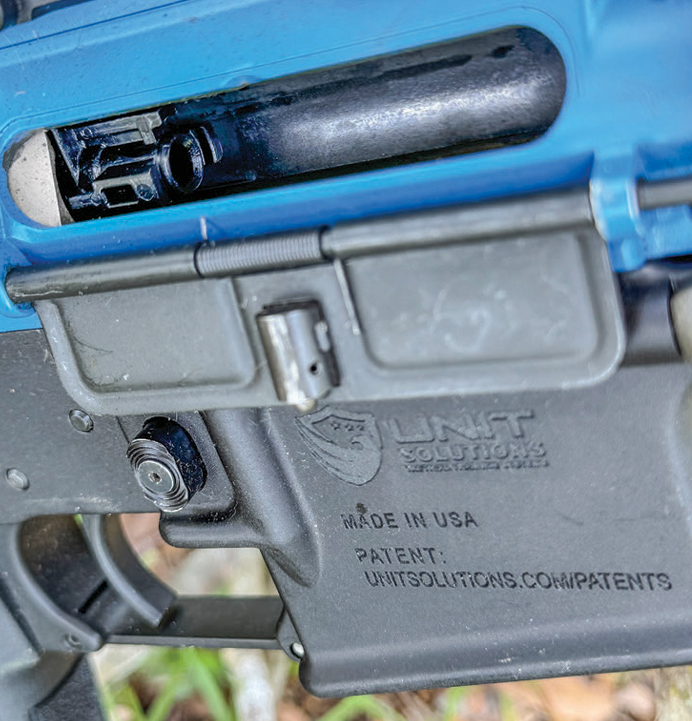
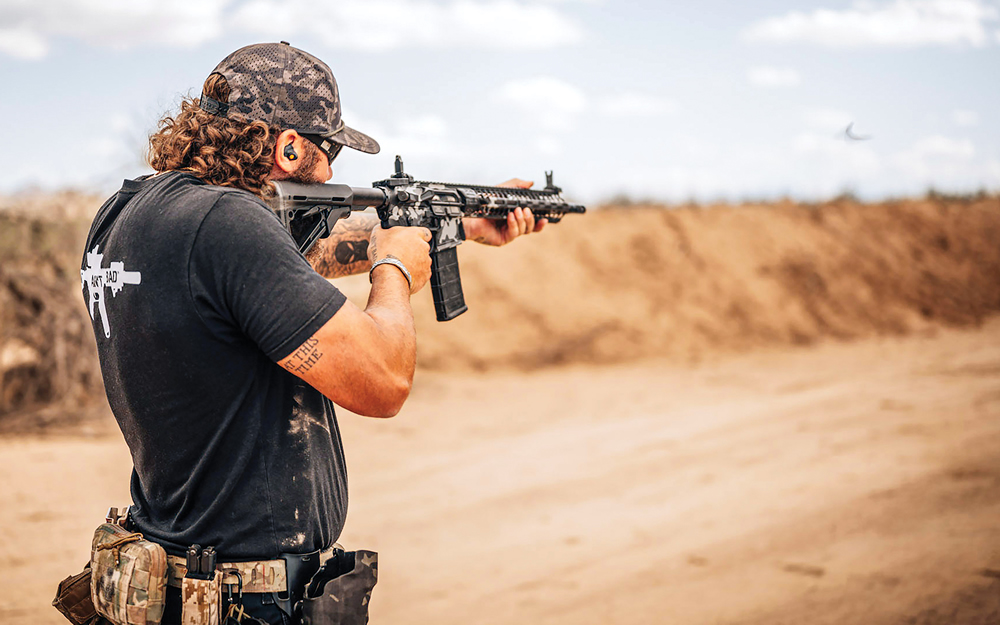
are made from durable materials that have the same fit and function as a real weapon.
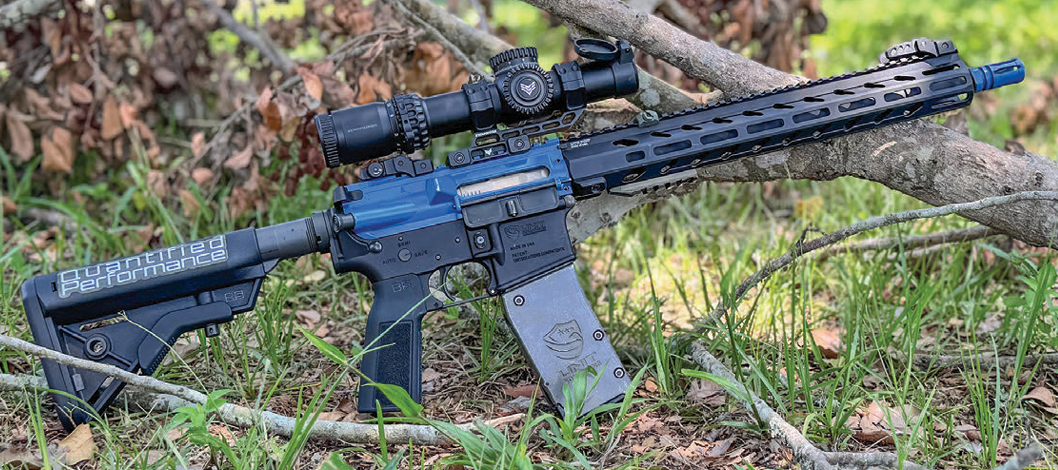
THAT BRINGS ME to a solution to these training issues. Unit4, from Unit Solutions, is a dedicated training platform focused on individual users and smaller budget agencies. Being purpose-built, it mimics live firearms in most every way. It is made using many of the same parts as live rifles minus those needed for the system and to keep it from being designated as a firearm. My Unit4 has a Midwest Industries rail and furniture from B5 Systems. While not “receivers,” what you would identify as the upper and lower are made from the same forgings and completed by known firearms manufacturers for Unit Solutions.
The company put a lot of effort into this system, and I have been running mine for a few years now. The manual of arms is exact, as is the weight. The only true difference you will feel is a long and mushy trigger. This is a result of the system and has a minimal effect on 99 percent of the cases of it. They offer different barrel lengths and many features to allow you to match your actual rifle, including the use of M-Lok negative mounting.
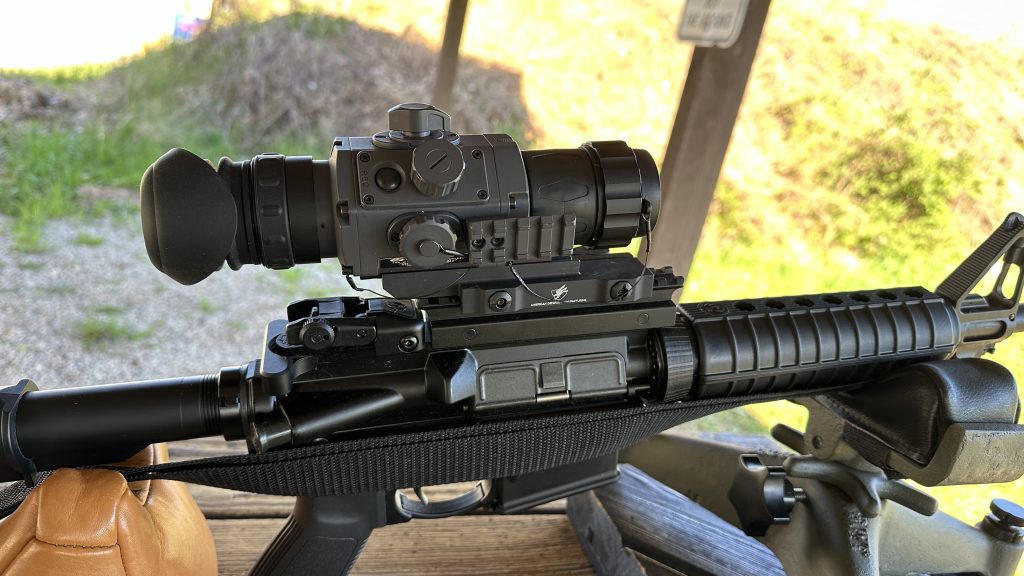
I have mine set up identical to my general-purpose rifle with a Swamp fox 1-6x optic. This allows me to practice all my movements and shots prior to matches or training events. I can get downrange feedback on steel or paper. All those reps directly translate to the live rifle and the only difference is slightly more recoil and noise. This follows most every other training progression in any other sport or activity.
While the entry price to get into the system ($1,400) is at the level of a live firearm, training with the system pays for itself very quickly. Currently, 300 non-marking rounds are $35. These are preloaded into 30-round Tpaks that are refillable with repack kits. There is a short learning curve to reloading the magazines and some care must be taken during that process, or the CO2 will launch the Tpak high into the air … allegedly. Once you learn the technique, they reload very quickly with minimal downtime.

WHAT I DISLIKE about articles like this is that the author lays out a bunch of stuff about a tool and does not give any best practices to go along with it. Luckily, I have the freedom to lay out some best uses for a system like Unit4. Whether you are fighting with a rifle or using it in competition, getting fast, accurate hits is a main component. This requires you to move into a shooting position, mount the rifle, acquire the sights and press the shot as fast as you can. Most of this comes from dry fire work and you do not have to fire a round to practice. The downsides to that are that you get no downrange feedback, you must reset the trigger and there is no movement from recoil. While it’s highly, highly recommended that most of your work is done this way, Unit4 comes in as the next stepping stone on your path to greatness. It allows you to run those same drills at speed, with follow up shots, and it gives recoil and downrange feedback. My top drills to use for individual speed work are focused on different things but teach some good lessons to start.
The first is the modified Viking Tactics half and half drill. This original drill is a three-part, 30-round drill. Part one is 20 yards in 10 seconds, part two is 10 yards in five seconds and part three is 5 yards in 2.5 seconds. All parts are 10 rounds, but the distance and time is cut by half. When using Unit4, the 20-yard string is a bit outside the effective range, so I modify by doing parts two and three. The purpose of this drill is to drive the rifle hard onto a single target and to shoot fast while still getting hits.
The second drill is the Viking Tactics 1-5 drill. This drill works speed and target transitions. Using three targets, you hit target one with one shot, target two with two shots, target three with three shots, back to target two for four shots, and target one with five shots. This 15-shot drill should be done in less than 4 seconds with 3 seconds being the goal. This drill forces you to transition targets and shoot fast. Plus, it is a lot of fun.

Once you have those two drills tuned in, you can move on to other things. Literally. Both competition and gunfighting require movement. Maybe not shooting on the move, but changing from position to position. Using Unit4, we can duplicate stages that work those skills using simple items like cardboard or, my favorite, old motorcycle license plates. By setting up stages that require you to move, set and get your hits
quickly with the downrange feedback from the targets, you can spend all the time you need to get fast. You can introduce various positions and work on all the skills to improve. The value comes from being able to do it most anywhere at any time.
If you are taking gunfighting or competition seriously, quality practice should be part of your routine. These skills atrophy very quickly and, in either case, high performance on demand is part of winning. Tools such as the Unit4 from Unit Solutions bring a lot of value to that practice with realism and quality. Visit unit solutions .com for more information.
Editor’s note: Ash Hess is a highly seasoned combat veteran of 22 years with four combat deployments to Afghanistan and Iraq, totaling 52 months. His military training includes the US Army Master Marksman Trainer course, as well as rifle marksman instructor, urban combat leaders’, senior leaders’, army basic instructor, high-angle marksman and unit armor courses. He also wrote TC3-22.9, the Army’s marksmanship manual.